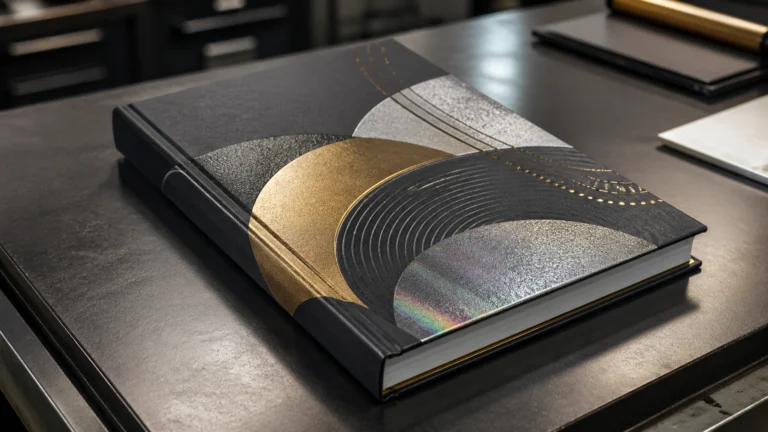

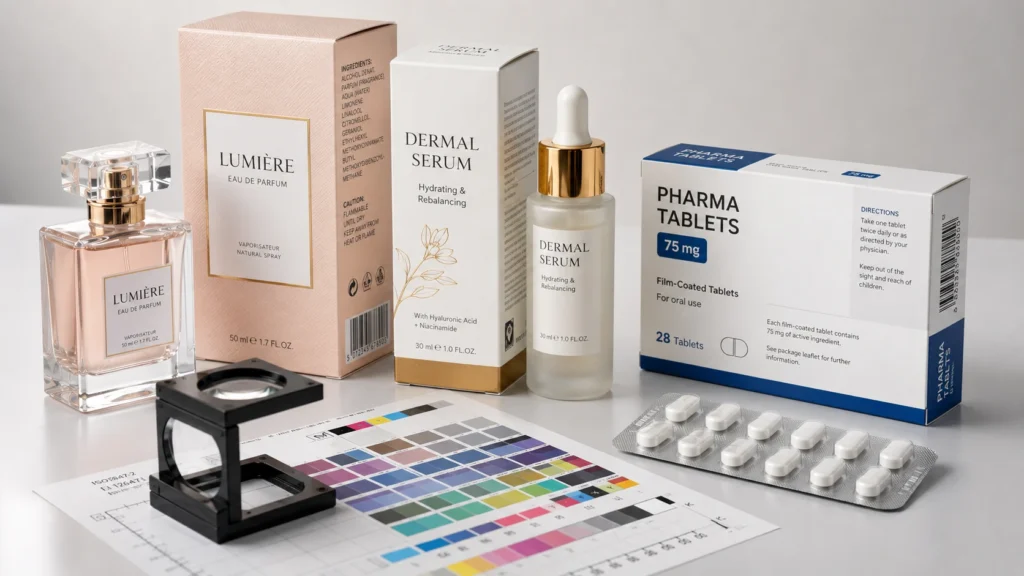
A perfume box, a medicine carton, a blister card or the packaging for a premium skincare product all have something in common: their final appearance depends on precise, stable and safe printing. In these sectors, ink is not just a matter of colour; it is part of a technical system that must meet requirements for safety, resistance, compatibility and visual quality.
Cosmetics and pharmaceutical packaging place demands on ink that go far beyond the visual result. Chemical safety, resistance to external agents, control of substance migration and behaviour during subsequent converting processes are non-negotiable conditions in these sectors. And yet, they do not always receive the technical attention they deserve when selecting an ink system.
In this article, we analyse what makes offset printing different in these two sectors, what an ink must provide in order to meet their requirements, and how the manufacturer can become a real technical partner —not just a supplier— in high-value projects.
Not all cosmetics and pharmaceutical packaging involves the same challenge
Before talking about inks, one key point should be made clear: printing the outer carton of a medicine is not the same as printing a blister card, a perfume box, dermocosmetics packaging or promotional packaging with metallic finishes. Each application combines different requirements: chemical safety, rub resistance, compatibility with heat-sealing processes, colour stability, resistance to alcohols or the ability to reproduce brand colours accurately.
That is why, in these sectors, choosing a generic “good offset ink” is not enough. The key lies in selecting the right range according to the substrate, the subsequent converting process, the type of packaged product and the regulatory requirements of the end customer. This is precisely the approach that distinguishes a technical manufacturer from a mere ink supplier.
Chemical safety, low migration and low odour: key requirements
The first requirement in these sectors is that the ink must not compromise the safety of the product or the consumer. In pharmaceuticals, the packaging may be in indirect contact with the medicine; in cosmetics, it may coexist with products applied directly to the skin or with fragrances that are highly sensitive from an organoleptic point of view.
This places substance migration —the transfer of ink components to the product or its surrounding environment— as the main technical selection criterion. Reducing migration requires the selection of raw materials with a controlled migration profile, evaluation of their behaviour under real conditions of use and the formulation of inks specifically designed for sensitive applications. The use of vegetable oils can form part of this approach, but it does not replace a low-migration formulation by itself: what determines whether an ink is truly suitable is the rigorous selection of each raw material and the validation of the complete system.
Low odour is equally critical. An ink with an odour residue —even a minimal one— can transfer that note to the product it wraps or to the packaging environment. In a perfume box or a medicine blister pack, any odour unrelated to the product itself is a serious defect with commercial and regulatory consequences.
Both properties are the direct result of decisions made in the formulation laboratory, not adjustments that can be solved on press.
The reference regulatory framework
The EuPIA Charter —the code of good manufacturing practice of the European Printing Ink Association—, in force since 2025, establishes criteria for the selection and exclusion of raw materials in printing inks, and is the sector’s starting reference for any responsible formulator working in sensitive applications.
At European level, the principles of Regulation (EC) No 1935/2004 —designed for materials intended to come into contact with food— are commonly used as a technical reference in sensitive packaging beyond the food sector, as they establish that no component should be transferred to the packaged product in quantities that could endanger health or alter its organoleptic properties. In this regard, the German Ink Ordinance (GIO), mandatory in Germany from 2027, has become the most demanding de facto standard in Europe for the chemical safety of packaging inks, and its influence is already extending throughout the European supply chain. In parallel, frameworks such as the Swiss Ordinance reinforce the need to work with inks whose composition and traceability are properly documented.
At MA Inks, these types of applications are approached from the formulation stage and through the technical selection of the most suitable range for each project, differentiating between low-migration solutions for indirect-contact packaging, inks for blister substrates and complementary varnishing systems when the project requires them.
For indirect-contact packaging in the food, pharmaceutical and cosmetics sectors, MA Inks offers the LM series: a fresh, low-migration and low-odour ink specifically formulated for these applications, with raw materials selected for their organoleptic properties and a global migration limit below 60 mg/kg. For jobs requiring Pantone® colours under the same low-migration criteria, the Pantone Basic LM series offers the same technical basis with Pantone®-approved pigments.
Cosmetics and pharmaceutical substrates: variety and technical demand
If there is one factor that technically differentiates the printing of cosmetics and pharmaceutical packaging, it is the diversity and complexity of the substrates. Unlike mass-market packaging —where standard paper and coated board predominate—, these sectors work with materials that test ink performance in very different ways.
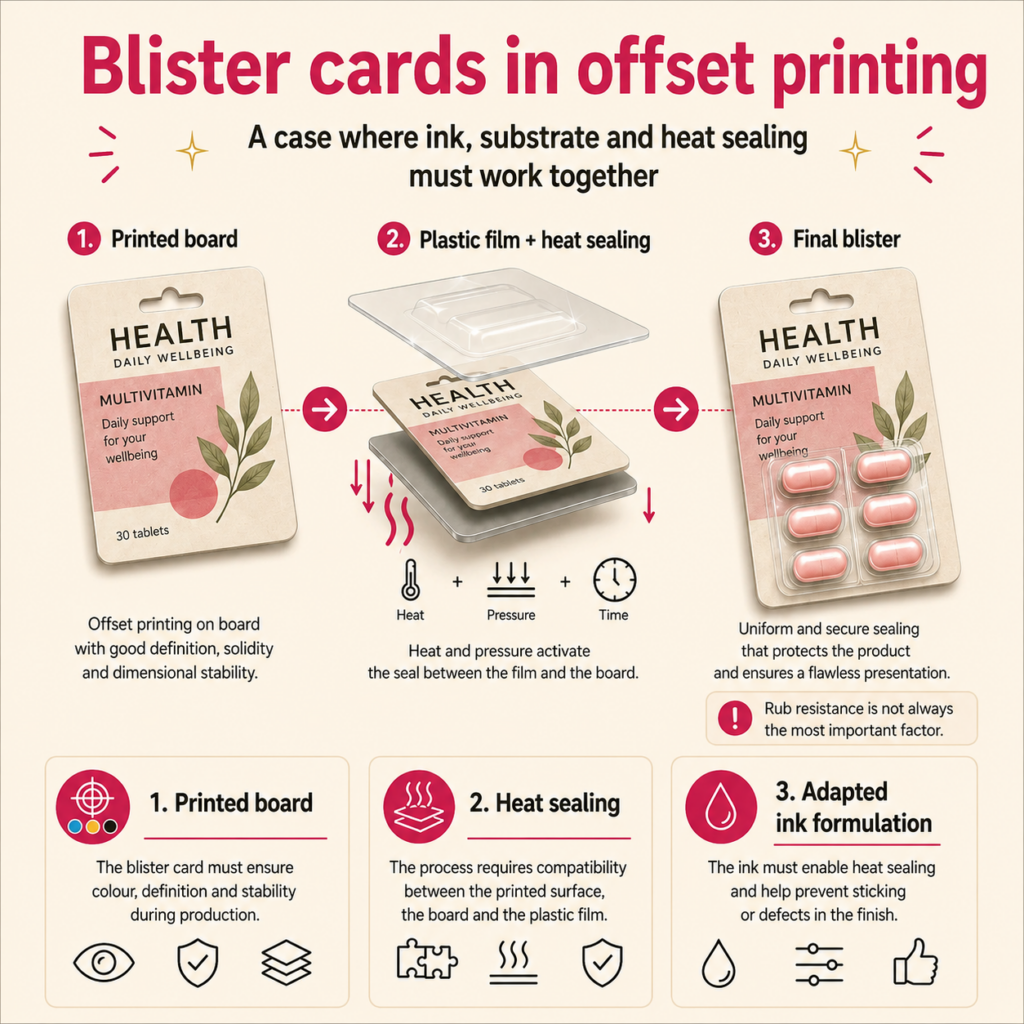
Pharmaceutical blister cards. Cards for blister packs require a very specific technical profile: high pigmentation to ensure legibility and brand colour fidelity, fast oxidative drying and —one of the most relevant and least known technical details— deliberately low rub resistance. An ink surface that is too hard may prevent the thermoformed plastic film from adhering correctly to the board, compromising the tightness of the blister pack and, with it, the integrity of the medicine. For these applications, MA Inks has developed the Blisterpack series: a high-pigmentation range expressly formulated for blister cards, with fast oxidative drying and the right surface properties to ensure heat sealing.
Non-absorbent substrates in luxury cosmetics. Premium perfumery and cosmetics packaging often uses metallised boards, laminated plastics, films and corona-treated materials. These substrates have low surface energy and require ink formulations that guarantee adhesion, gloss and chemical resistance without the need for costly additional treatments.
Resistance to alcohols and chemical agents. Fragrance and cosmetics packaging may be exposed to splashes of ethyl alcohol or to the products it contains. An ink that has not been formulated to withstand these agents may suffer loss of gloss, transfer or visible degradation of the printed surface over time.
Colour accuracy and consistency: premium packaging leaves no room for error
The cosmetics sector is one of the most demanding markets in terms of colour fidelity and consistency between print runs. Major perfumery, dermocosmetics and make-up brands invest significant resources in building a visual identity, and any colour deviation in the packaging —however small— is unacceptable.
In demanding projects, the ability to match Pantone® colours accurately and maintain reproducibility between batches becomes a differentiating factor for printers and brands. This is combined with the need to work with highly pigmented inks that provide deep colour densities and superior gloss, especially when the job combines process colours with special or metallic inks.
Long-term stability is also part of the equation: cosmetics packaging may remain in storage for months before reaching the point of sale. The ink must maintain its appearance throughout this period without yellowing, loss of gloss or chromatic alterations.
Ink, varnish and finish: a system that must work as a whole
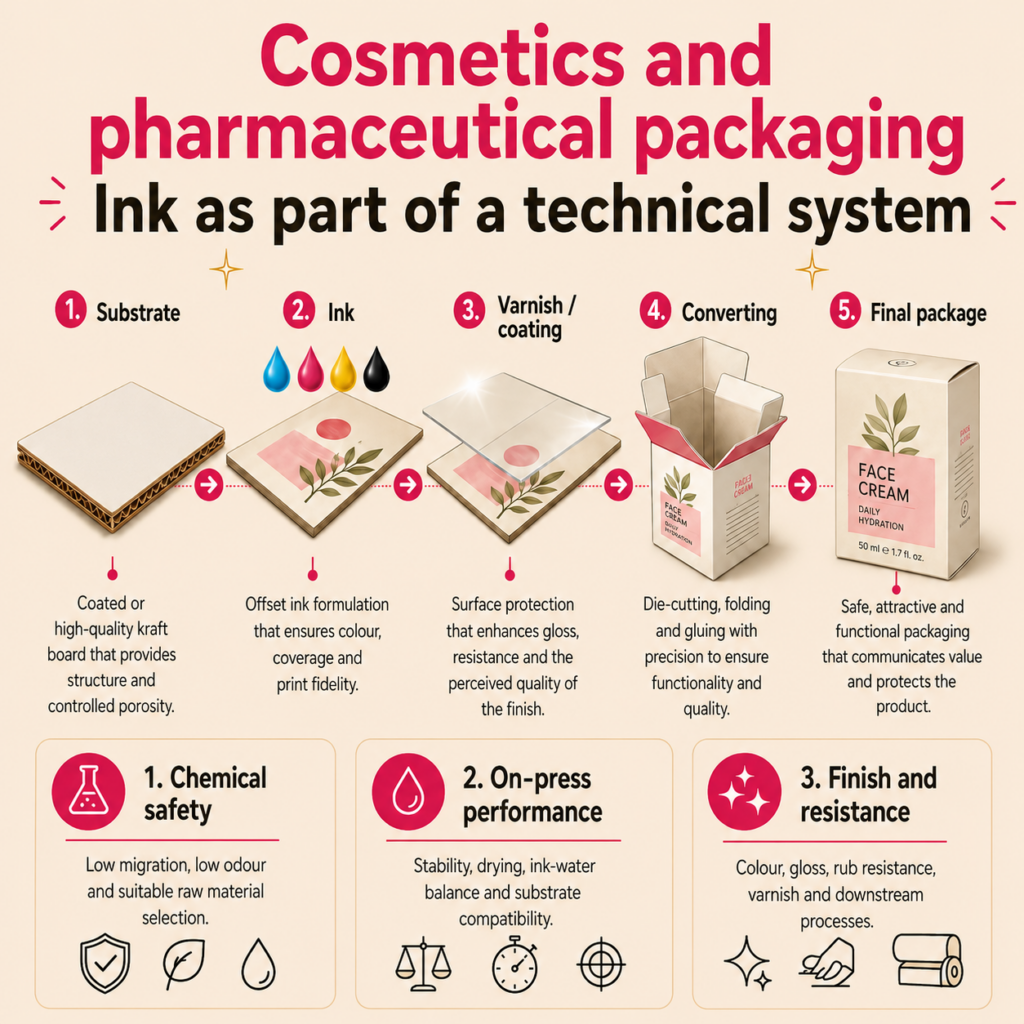
In cosmetics and pharmaceutical packaging, the choice of ink cannot be assessed in isolation. The varnish, the substrate and the subsequent converting processes are part of the same system, and any incompatibility between them can compromise the final result.
An overprint varnish can improve rub resistance, gloss, slip or surface protection of the printed item, but it must be compatible with the ink, the substrate and the migration requirements of the project. In indirect-contact applications, combining the LM series with low-migration acrylic varnishes ensures that the entire printed system —ink and finish— maintains a coherent safety profile from start to finish. MA Inks offers varnishing solutions specifically formulated for these contexts, both in matt finish and in neutral water-based coating.
That is why, in sensitive applications, each component should not be analysed separately. The final result depends on the complete system: ink, varnish, substrate, drying, storage and the intended use of the packaging.
Frequently asked questions about offset inks for cosmetics and pharmaceutical packaging
Can any conventional offset ink be used for pharmaceutical or cosmetics packaging? Not necessarily. Depending on the specific application —especially if there is indirect contact with the product or specific process requirements such as blister heat sealing—, it is necessary to assess whether the ink has been formulated to meet those demands. The recommendation is always to consult the manufacturer and verify the technical documentation before assuming that a standard ink is suitable for these sectors.
What is the difference between printing for mass-market cosmetics and luxury cosmetics? Mainly the level of demand in terms of colour accuracy, consistency between print runs and finishing quality. Luxury packaging works with very narrow colour tolerances, more complex substrates and greater investment in special finishes. The ink must respond to these requirements with highly pigmented formulations and guaranteed batch-to-batch reproducibility.
Does pharmaceutical blister packaging require a different ink from the outer medicine carton? Yes. The blister card has specific technical requirements —particularly compatibility with the heat-sealing process— that are not the same as those of the outer carton. Each component of the packaging must be assessed independently according to its function and manufacturing process.
Can I use standard process inks together with low-migration Pantone® inks in the same job, or does everything need to be low migration? To guarantee the safety profile of the complete system, it is recommended that all inks used in the job are low migration. Combining standard inks with low-migration inks in the same printed item may compromise the consistency of the system and make it more difficult to issue the declaration of conformity for the final packaging. At MA Inks, we offer low-migration ranges both in process colours and Pantone® colours, precisely so that the entire job can be produced under the same chemical safety criteria.
Conclusion
Printing cosmetics or pharmaceutical packaging is not just a matter of visual quality. It is a technical responsibility that begins before the ink reaches the press: in the selection of raw materials, in the formulation, in compatibility with the complete system and in the documentation that supports every decision.
At MA Inks, we have been developing specific solutions for these sectors for decades, with an R&D department focused on responding proactively to their requirements. If your printing company works in cosmetics or pharmaceuticals —or wants to enter these markets—, our technical team can help you identify the most suitable solution for each project, from the ink to the finishing varnish.
Contact us and tell us about your project: ma-inks.com/en/contact · info@ma-inks.com