
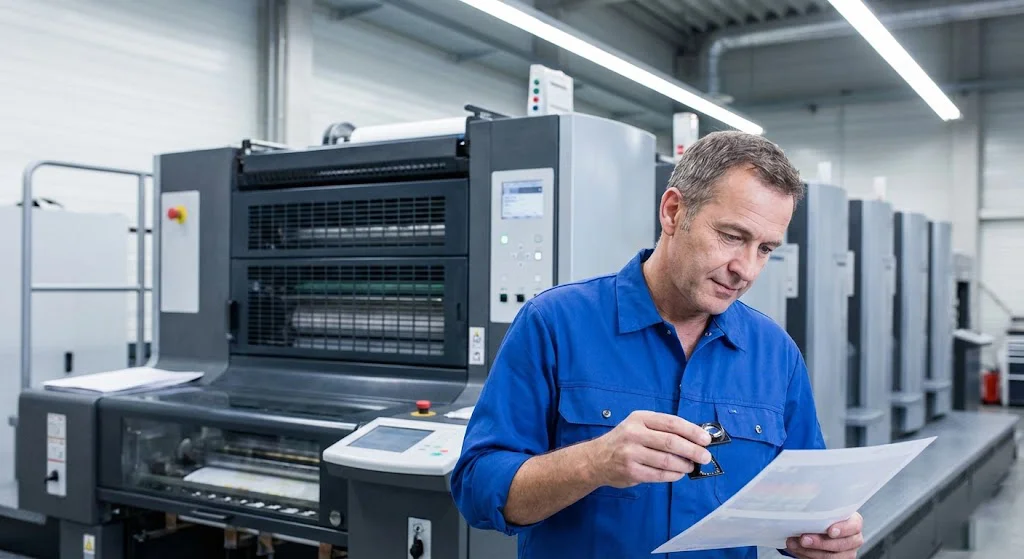
In the contemporary graphic arts industry, the success of a production is not defined solely by technical expertise or original design adjustment, but in the complex interaction where ink chemistry meets substrate matter. For today’s printer, choosing the offset ink according to the printing support is a fundamental strategic decision that goes far beyond color management: it is an exercise in applied materials science in the workshop. Each job represents a unique challenge of hydrodynamic balance, surface tension, and drying kinetics. Understanding that the support is not a passive surface, but an active element that conditions how the ink sets, how it shines, and how it resists subsequent handling, is the key to guaranteeing operational stability and maximum quality in every sheet that leaves the press.

Coated paper: The challenge of speed and set-off
Coated paper and conventional cardboard remain the reference materials in high-end commercial and editorial printing. Their structure seeks to offer the maximum smoothness and ink receptivity possible thanks to their mineral layer. However, this layer acts as a barrier that conditions absorption. The main challenge is to achieve absolute optimization of setting times to avoid the phenomenon of set-off.
In this context, the PREMIUM AS Series is presented as a highly relevant option to optimize workflow, as its fixing capacity allows for drastically shortening sheet handling times. By stabilizing physically almost instantaneously, the printer can reduce the use of anti-set-off powders by up to 70%. This not only ensures that subsequent finishing processes, such as laminating or stamping, have total adherence by avoiding the physical barrier of the powder, but also allows the job to move to the next post-printing phase in record time. In fact, the speed of this series facilitates the work-and-turn process in just 10 or 15 minutes, eliminating bottlenecks in the workshop and accelerating the final delivery of the product that leaves the press.

Recycled fibers: Sustainability and absorption management
The transition toward a circular economy has consolidated the use of recycled papers and renewable fibers. These substrates present a much more irregular and disordered capillarity than virgin paper, which often causes the ink to “sink” into the support, reducing gloss and contrast in the final result. The challenge here is to find an ink that respects the material’s ecological profile without sacrificing mechanical intensity.
For these types of supports, we have various solutions in our catalog that guarantee optimal behavior, especially highlighting the Premium AS and BIO CF series, among other ranges designed to manage the porosity of recycled fibers.
The BIO CF series, in particular, represents our most advanced commitment to the circular economy, as it is certified for printing industrial compostable packaging (standard UNE-EN 13432:2001) and offers a 99/100 result in the INGEDE Method 11 deinking test.
Low-absorbency supports and technical packaging
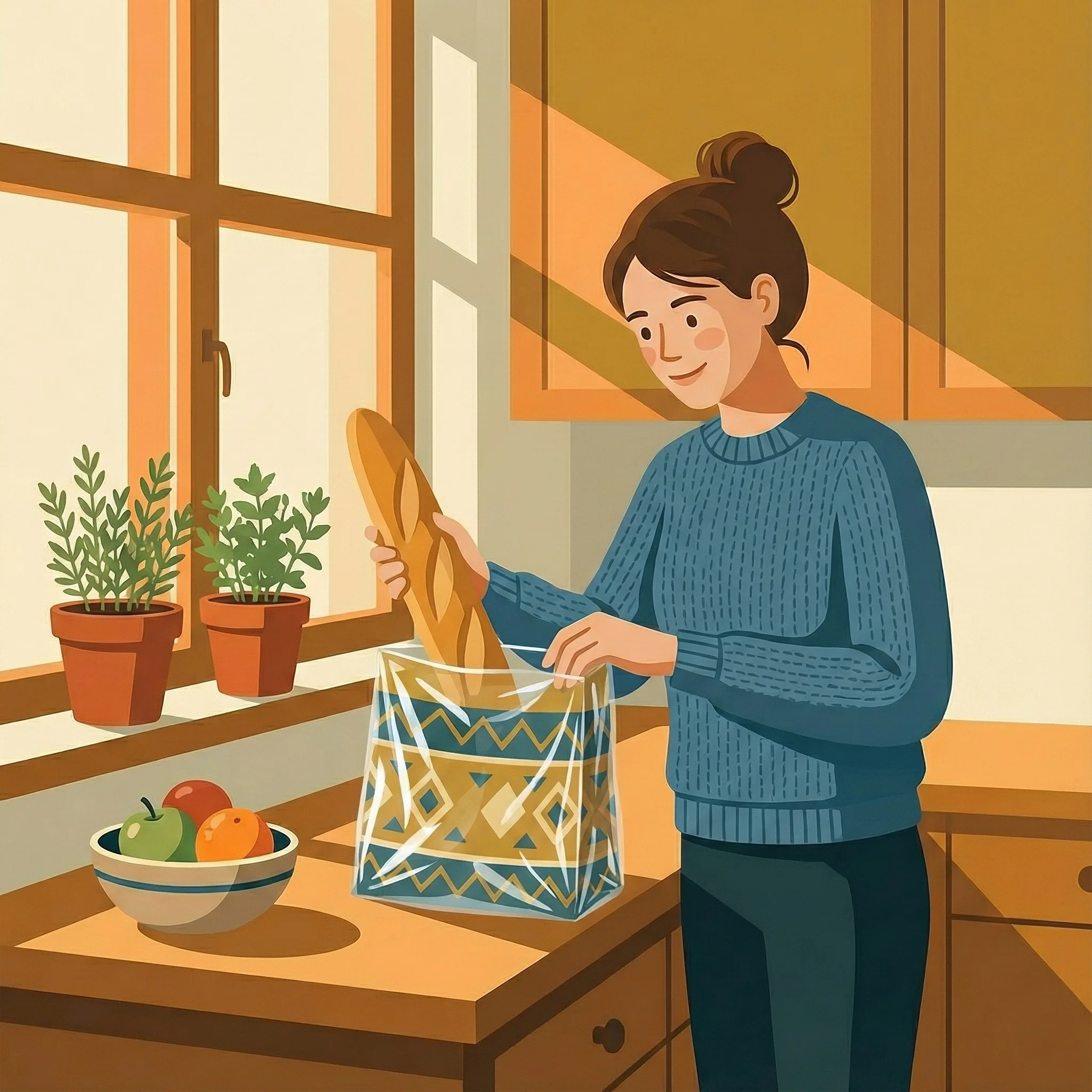
The use of technical cardboards, such as those incorporating Polyethylene (PE) layers, is common in packaging that requires protective barriers. In these materials, porosity is almost non-existent, preventing the ink from drying by the traditional absorption method. Anchoring on these surfaces depends exclusively on surface chemical interaction and the ink’s ability to form a solid matrix on a “closed” support.
For these challenges, the HTK Series offers exceptional performance. It is a high-pigmentation range of a semi-oxidative nature, whose efficacy lies in a careful combination of raw materials that guarantee high adherence and optimal drying on this type of low-absorbency surfaces.
Thanks to its formulation, the print is able to successfully withstand the entire life cycle of the package: both workshop handling (cutting, folding, and gluing processes) and the subsequent demands of transport and logistics, ensuring the design arrives intact to the final consumer.
The vanguard of instant drying: UV and LED Technology
When the production process does not allow for waiting times, radiation curing technology is the definitive solution. In these systems, the ink polymerizes instantly upon passing under lamps, allowing the material to move directly from the machine to finishing processes, eliminating traditional standing times.
Within our range of immediate curing solutions, the following stand out:
-
UV Premium Speed: Developed specifically for offset printing on paper and cardboard, as well as pre-treated plastic supports, this series is designed to operate at maximum production speeds. It offers excellent lithographic properties and guarantees good gloss and high color intensity.
-
UV ECO LED PRO: This is our Low Energy curing series for LED/LE-UV systems. It allows for fast curing with minimum energy consumption and offers a high gloss and color intensity finish, while also maintaining excellent behavior at high printing speeds.
-
UV LED CURETECH: A low-energy curing series designed for paper and cardboard, suitable for LED, HR, LE-UV, and H-UV systems. It stands out for its great stability and reliability, offering excellent machine performance for high-quality finishes. Valid for vinyl with corona treatment, pre-treated plastic films, and PP films.
By focusing the strategy on instant drying capacity, these technologies optimize delivery times and maximize the profitability of each run, ensuring uninterrupted productivity.

Packaging specialization: Adherence and food safety
Specialized packaging requires inks that combine extreme flexibility with the highest safety standards, especially when the final product is intended for the food or pharmaceutical sector. In these cases, the interaction between the ink and the support must be perfect to avoid cracking during die-cutting or migration risks.
The UV Pack series is recognized for its excellent adhesion on the vast majority of non-absorbent (and absorbent) supports on the market. It provides a printed layer with very good flexibility and high rub resistance, making it ideal for cases and supports that undergo mechanical deformations during forming.
When absolute health safety is the priority, low-migration and low-odor series come into play. The UV Board LM series has been specifically formulated for packaging on absorbent supports such as cardboard, while the UV Pack LM series is the technical choice for non-absorbent supports and high-demand applications such as IML (In-Mould Labeling). Both ranges guarantee minimal overall migration, strictly complying with food packaging requirements where there is no direct contact with the product. To ensure total integrity in these jobs, it is recommended to complement printing with specific low-migration varnishes.
Conclusion
In today’s competitive scenario, understanding that the choice of ink is an inseparable variable from the type of support is what makes the difference in a workshop’s profitability. The specialization of our ranges is not a coincidence, but an engineering response to the complexity of modern materials. The printer who analyzes porosity, surface tension, and the product’s final use before starting the machine is the one who guarantees an impeccable result.
Do you have a printing project on a specific support? Get in touch with our team and we will recommend the ink series that best suits your production needs.